
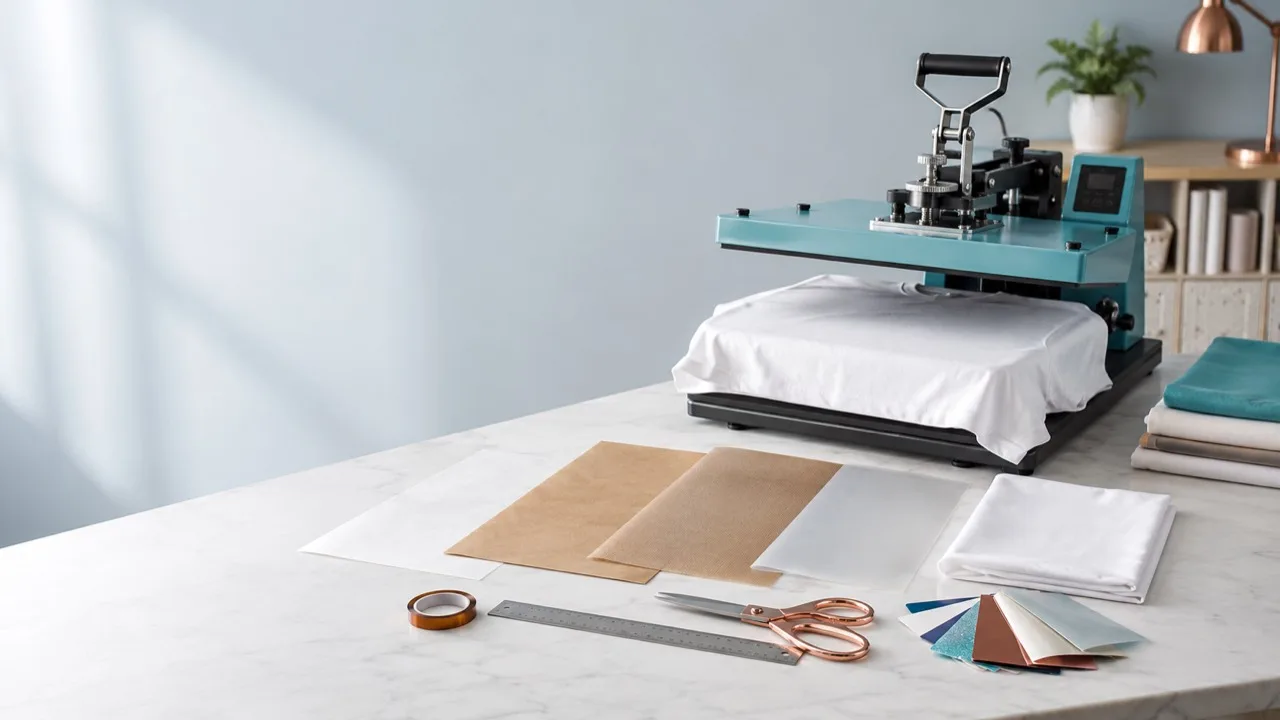
Current cover sheet note
Recommended cover sheet type
Update the inputs to choose a starting cover sheet.
What it can improve
What it cannot fix
Second press caution
Test note
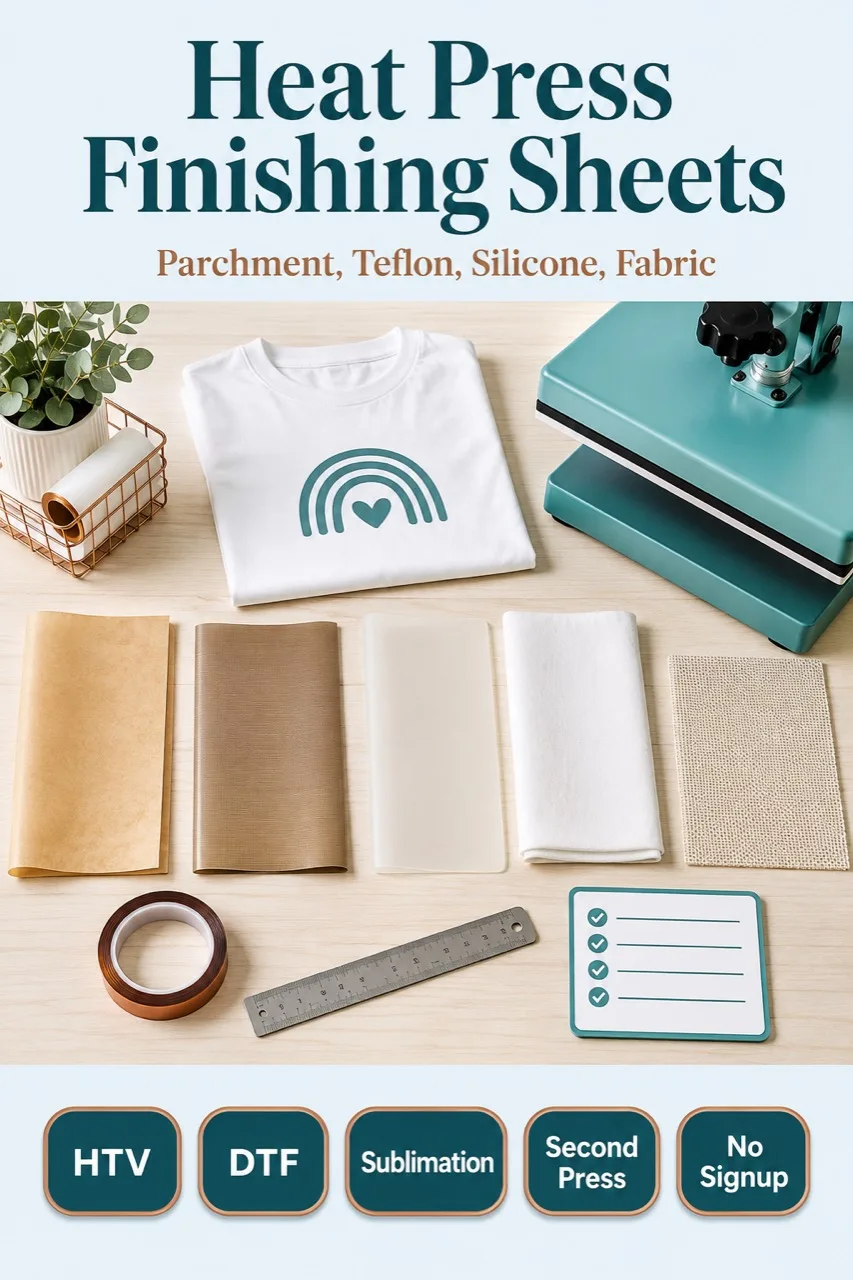
Material reminder
Keep the photo separate from the actual press settings
The preview shows common finishing materials, but the real decision is still the transfer supplier setting, the blank, and a scrap test. Use the tables below to decide what belongs between the platen and the transfer.
Quick decision table
| Goal | Best starting cover sheet | Use with | Watch out for |
|---|---|---|---|
| Matte finish | Parchment or matte textured finishing sheet | HTV and DTF final press | Test first; it can dull shine but will not make a heavy transfer disappear. |
| Smooth protection | Clean Teflon sheet | HTV carrier marks, light protection, repeat work | Keep it clean. Residue can transfer to the next blank. |
| Softer texture | Cotton fabric cover or textured finishing sheet | HTV and some DTF second presses | Texture changes surface feel, not the thickness of the whole design. |
| Cushion or texture | Silicone sheet or silicone pad | Raised seams, textured fabric, small pressure gaps | Too much cushion can reduce pressure or flatten raised effects. |
| Sublimation protection | Fresh butcher-style protective paper | Sublimation shirts, mugs, tumblers, and press pads | Do not reuse blowout paper. It can ghost or stain the next item. |
Material comparison table
| Cover sheet | Finish effect | Best use | Avoid or caution | Reuse or cleanliness note |
|---|---|---|---|---|
| Parchment / butcher-style protective paper | Matte to soft-matte, usually less glossy than Teflon | Single-use or low-residue HTV checks, DTF finish press, sublimation protection | Avoid waxed paper and dirty sheets. For sublimation, use clean fresh paper only. | Cheap and replaceable; mark sheets by process so ink residue does not move to another job. |
| White kraft paper | Light matte protection with low residue when the paper is clean and uncoated | Disposable cover for HTV or DTF finish tests when you want a fresh sheet for each press | Use only clean, unprinted, uncoated, heat-safe white kraft paper. Do not treat it as a universal replacement for supplier-recommended paper. | Best as single-use or short-run protection. Replace it if it picks up adhesive, ink, lint, or scorch marks. |
| Teflon sheet | Smooth and slightly slick; can leave a glossier surface on some films | General HTV protection, carrier edge control, repeated press station use | Residue, adhesive, glitter, or ink on the sheet can transfer. It may not be the best choice for a matte finish. | Reusable, but only while clean. Inspect both sides before each press. |
| Silicone sheet or silicone pad | Slight cushion; can help contact over small uneven areas | Seams, hoodie fleece, tote canvas, small pressure gaps, specialty blanks | Too much cushion or pressure can change texture, flatten puff, or reduce adhesive contact. | Reusable. Keep lint, adhesive, and ink away from the surface. |
| Cotton fabric cover | Adds a fabric-like surface and can reduce shine | Second pressing HTV, checking texture, protecting delicate fabric | Fabric thickness changes heat transfer. Use a clean white cotton cover and test for scorch marks. | Wash or replace when residue builds up. Keep one cover for light fabric only. |
| Clean cotton scrap / blank shirt | Soft fabric contact that can reduce hard edges or gloss during a careful second press test | Testing a softer final surface on HTV or DTF before choosing a production cover method | Use only clean, plain cotton with no print, coating, lint, or residue. Cotton absorbs heat, so test on scrap first and do not expect it to make thick HTV or DTF feel like screen print. | Treat it as a test cover or labeled shop scrap. Replace it when it scorches, stretches, or collects adhesive. |
| Textured finishing sheet | Intentional matte, fabric, linen, or specialty texture | Final finish on compatible HTV or DTF transfers | It changes the top surface only. It cannot fix bad cure, poor adhesive, or a transfer that is too large and stiff. | Reusable if clean. Store flat so the texture does not crease. |
Upper platen cover, loose cover sheet, and the white roll
New heat press owners often mix up the fitted cover on the upper platen, the loose sheet used during a press, and the white material that may arrive in the box. Treat them as separate items until the manual or seller confirms the material.
After adding an upper platen cover or changing cover sheets, repeat a paper pull test at the four corners and center before pressing customer work. A cover can protect the platen, but it can also change how firm the press feels.
For a 16 x 24 heat press, a loose Teflon sheet cut exactly to 16 x 24 can be awkward because there may be no extra edge to hold, clip, or place under magnets outside the press area. If you want the sheet to stay on the press during repeat work, compare a fitted upper platen cover with a slightly larger loose sheet or a Teflon roll cut to a handling-friendly size.
| Item | What it is | Where it helps | Pressure and safety note |
|---|---|---|---|
| Upper platen cover | A fitted sleeve or cover that stays on the upper heat platen. | Protects the platen from residue during repeat work. | It can slightly change pressure or heat transfer. Run a scrap test after adding or removing it. |
| Loose cover sheet | A sheet placed between the transfer and the heat platen for one press. | Protects the transfer face, controls shine, catches residue, or supports a second press. | Keep it clean and process-specific. Dirty sheets can move adhesive, glitter, lint, or sublimation ink. |
| Teflon / PTFE sheet | A reusable non-stick cover sheet, not the same as parchment. | Useful for some HTV protection and repeated station use. | It can leave a smoother or glossier finish on some films, and residue can transfer to the next blank. |
| White roll included with a press | Could be non-stick sheet, protective paper, silicone-coated paper, or packing material depending on the seller. | Confirm with the manual or seller before using it on a real job. | Do not assume it is safe for every HTV, DTF, sublimation, or adhesive-vinyl material. |
Teflon sheet size and 16 x 24 platen checks
| Press setup | Better starting choice | Why it helps | Check before production |
|---|---|---|---|
| 16 x 24 platen with magnets | Slightly larger loose sheet or fitted upper platen cover | A same-size 16 x 24 sheet can leave no handling edge for magnets and can shift while loading a garment. | Keep magnets outside the press area when the press maker allows them, then repeat a scrap pressure test. |
| Repeat HTV station | Fitted cover on the upper platen plus a loose cover only when the material needs it | The fitted cover protects the platen during repeated work, while the loose sheet still matches the current HTV finish. | Check whether the cover changes pressure or leaves a smoother finish than the customer expects. |
| One DTF finish press | Clean loose parchment, Teflon, cotton, or textured sheet sized to cover the transfer | The cover only needs to protect the transfer face and finish area for that press. | Follow the transfer supplier's second-press instruction before changing sheet type. |
| Teflon roll | Cut a piece with enough edge to place, lift, and store flat | A roll is useful when the platen size is unusual or a pre-cut sheet has no overhang. | Label it by process and replace it when adhesive, glitter, lint, or ink builds up. |
| Unknown white sheet | Do not use it on customer work until the material is confirmed | White sheet, roll, or liner can mean different things from different sellers. | Ask the press seller or material supplier before treating it as a Teflon sheet or heat-safe cover. |
HTV, DTF, and sublimation use table
| Transfer type | Where a cover sheet helps | Second press caution | Limitation |
|---|---|---|---|
| HTV | Good for gloss reduction, carrier protection, matte finish, and texture tests. | Use short second presses with the supplier setting. Puff, flock, metallic, and specialty films can flatten or change. | A cover sheet cannot make a thick full-front design feel like screen print. |
| DTF | A finish press can change shine and surface hand, and may help seat edges when the supplier recommends it. | Keep time, pressure, peel, and cover sheet aligned with the transfer supplier. Compare cracking and peeling separately. | It cannot fix wrong cure, bad adhesive, overlarge film, wash cracking root causes, or poor fabric match. |
| Sublimation | Protective paper mainly catches ink vapor and protects the press, pad, or blank surface. | Use clean paper above and below when needed. Do not reuse blowout paper. | A cover sheet does not fix color profile, coating quality, wrong blank choice, or faded ink from bad settings. |
Second press common mistakes
- Too much heat or time can flatten puff, soften texture, or make a transfer feel harder.
- Dirty Teflon, parchment, or fabric covers can move adhesive, ink, lint, or glitter onto the next blank.
- A cover sheet will not solve an oversized or heavy transfer that should be smaller, thinner, or split into pieces.
- Too much pressure on textured fabric can leave fabric marks or crush the surface.
- Reusing sublimation blowout paper can put old ink onto a clean blank.
- Burlap, sandpaper, dirty towels, printed paper, and coated paper are not stable everyday heat press cover materials.
- Skipping a scrap test makes it hard to separate material limits from press setup problems.
Risk and honesty notes
This page is planning guidance for a press station test. Follow the material supplier settings, test on scrap or a hidden area, and keep one clean cover sheet for each process when residue is possible.
Cover sheets can change finish and surface feel, but they cannot turn a heavy large transfer into a true screen print feel or repair a transfer with the wrong cure, adhesive, coating, or wash process.
FAQ
Can parchment paper make HTV matte?
Often it can reduce shine, especially during a short covered second press. Use heat-safe parchment or protective paper, avoid waxed paper, and test the exact HTV before pressing the final item.
Is Teflon better than parchment for HTV?
Teflon is durable and reusable when clean, but it can leave a smoother or glossier finish on some films. Parchment is cheaper, easier to replace, and often a better first test for a softer matte finish.
Can a finishing sheet fix stiff DTF?
A finish press can change surface shine and hand, but it cannot fix a transfer that is too large, too thick, poorly cured, poorly bonded, or not suited to the fabric.
Should I second press sublimation?
Usually no. Sublimation uses protective paper during the press to control ink vapor and protect the press surface. A second press does not fix color, profile, coating, or blank problems unless the blank supplier instructs a specific process.
Can fabric cover sheets add texture?
Yes, a clean cotton cover can add a softer surface impression on some HTV and DTF finishes. The result depends on heat, pressure, fabric thickness, and the transfer surface, so test before production.
Do I need an upper platen cover?
You do not always need one, but it can protect the top platen from adhesive, ink, and residue. If you add one, repeat a scrap test because it can slightly change pressure and heat transfer.
Should a Teflon sheet be larger than the heat press platen?
For a loose sheet, a little extra edge is often easier to place, lift, clip, or hold outside the press area. A same-size sheet on a 16 x 24 platen can leave no overhang for magnets or handling. For a fitted cover, choose the cover size made for that platen.
Is a fitted platen cover better than a loose Teflon sheet?
They solve different problems. A fitted cover protects the upper platen during repeat work. A loose sheet is chosen per material and finish, such as parchment for a softer matte test or clean Teflon for reusable non-stick protection.
What is the white sheet that came with my heat press?
Do not guess from color alone. It may be a non-stick sheet, protective paper, silicone-coated paper, or packaging material. Check the manual or seller before using it as a cover sheet on customer work.